Friday, May 04, 2007


Bearded Irises

Irises are stunning and very useful upright herbaceous perennials. They come in a wide range of colour range from rich blues to flashy yellows and extraordinary combinations such as butterscotch yellow and violet. Many also have beautiful, intricate patterns such as this stunning Bearded Iris - Kent Pride that came into flower yesterday.
Botanists put irises into two key groups: the rhizomatous, which have rhizomes on or just beneath the soil, and those that grow from bulbs. The first group divides into two further sections, the beardless and bearded (with a distinctive little beard in the flower centre like this Kent Pride). This Iris was bought as a perennial plant for £5.25 from St Bridget Nurseries this year. The garden centre stocks 10 varieties of Iris and then gets bulbs in during the bulb season. It should be noted that all Irises are harmful if eaten - though let's face it who would want to eat such a beautiful flower?

Thursday, May 03, 2007


Nursery Tours Great Success

The Tours around St Bridget Nurseries' production nursery were extremely well subscribed to. A total of six tours were held in aid of Children's Hospice South West. Visitors were asked to give a minimum donation of £2.50 for their tickets and so far over £150 has been raised for the charity. The tours lasted 2 hours and were led on foot by St Bridget's Nursery Manager, Jason. We began with a look at how the nursery prepares for its entries into horticultural shows, such as Devon County Show. Next stop were the greenhouses and a look at the bedding plant production unit and propagation techniques. The inspirational micro-propagation laboratory was a particular highlight - plants growing in effectively jelly! The tour then proceeded through the many container plant beds, the potting department and the tree fields. Everyone who attended the event thoroughly enjoyed it and everyone agreed they had no idea how much care and detail goes into producing the plants at St Bridget's. If you missed the tours but would be interested in attending future events at St Bridget Nurseries the send your details to join the company's mailing list - marketing@stbridgetnurseries.eclipse.co.uk

Wednesday, May 02, 2007


Roses

Usually roses don't tend to flower until later in the month and throughout summer. Gardens, including those at St Bridget Nurseries, are already seeing roses in full bloom. Roses need plenty of feeding if they're to produce dramatic displays, so give them a diet of granular rose fertiliser. A feed now and then another in mid-July should bring a profusion of perfect blooms. Check regularly for pests, blackspot and other diseases and treat appropriately. You can pick up all you need for a local garden centre like St Bridget Nurseries.

Tuesday, May 01, 2007

PLANT PROFILE: Pulsatilla vulgaris
Common Name: Pasque flower.
Likes a sunny position in well drained soil. This plants grows about 20cm tall and has a spread of 20cm. The pretty spring flowers are followed by fluffy seed-heads. The Royal Horticultural Society has given it their prestigious Award of Garden Merit (AGM) in recogntition of its outstanding excellence. Pulsatilla takes a while to get established and does not like to be disturbed, so plant it in the right spot and leave alone. If happy, plants will self-seed, so leave the seedheads to allow colonies to build up.

Monday, April 30, 2007


Quackers!

This is a photo of a lady duck who has decided to nest in St Bridget Nurseries' Herbaceous Department. The duck couple have set up home between pots of Irises on the nursery. When they leave the nest the couple very cleverly cover their eggs with leaves. Daily they are seen waddling around the nursery and they don't seem to mind staff working nearby, however there maybe a pause in the supply of Irises while the ducklings hatch!

Thursday, April 26, 2007


Climbing Clematis

There is something exotic and magnificent about clematis and this variety 'Fireworks' has a real spark! With large, purple flowers that are out now and last until summer flowers have unusual kinked petals, striped reddish-mauve. This large-flowering clematis looks lovely scrambling over a pergola, in full sun or partial shade. To prolong the flowering period plant alongside a late summer flowering clematis. The variety tends to eventually grow to 4m tall and 2m in spread.

This variety like a fertile, well-drained, neutral soil. It is a hardy plant and does not need regular pruning. Removing the dead stem-tips in late February or early March will keep the plant looking tidy. Apply a slow-release balanced fertiliser and a mulch of well-rotted garden compost around the base of the plant in early spring.

Wednesday, April 25, 2007


New at St Bridget's
Each day more and more bedding plants are entering the St Bridget Nurseries' Garden Centres from their nursery greenhouses. These dainty little plants are Diascia Little Dancer and Little Drifter.

Diascias are easy to grow, low maintenance plants which flower for an extensive season beginning in spring.
These diascias are particularly prolific and attractive varieties producing bright mid pink and coral coloured flowers which smother a dense, compact mound of foliage.
Diascias are so called because they have two 'spurs' (in Greek - di - ascia,) at the back of their flowers.
These plants are great for fast results in a new gardens or containers and they make a particularly showy display when planted in drifts of 3-5 plants. Can be grown in containers and hanging baskets.

Should be positioned in full sun in a well drained but moist soil.
A light trim after a main flower flush is all that is required to keep a neat habit as well as encouraging further flower production. For best results apply a slow release plant fertiliser.

Tuesday, April 24, 2007

Rhododendrons and Azaleas

Many people associate Rhododendrons with big woodland bushes but Rhododendrons (and Azaleas who are part of the Rhododendron family) can be dwarf and compact. The one thing they all have in common is beauty - one of the most architecturally pleasing flower heads in every colour imaginable! In Britain flowers appear mostly in spring varying from single bell shaped blooms, to enormous trusses of flowers. Flower colours include white, cream, yellow, orange, pink, red, dark red, mauve, near blue and many shades in between.
Hardy hybrid rhododendrons vary in foliage, flowers and forms but mostly have dark evergreen leaves, present all year. The variety ‘Pink Pearl’ is an old favourite as pictured above. Even if you live in an area where the soil is predominantly alkaline, where it is considered difficult to grow rhododendrons, it is sometimes possible to gain some success by treating the soil around the plants four times a year with an Ericaceous Plant Food.
Dwarf evergreen varieties
These are low-growing shrubs that flower in spring. Numerous flower colours and flower forms are available, the small varieties are very effective when planted in rock gardens and are a good choice for patios, where there is some shade.

Evergreen azaleas

The hybrid evergreen azalea varieties were mostly derived from Japanese plants. Popular as houseplants, and chosen for growing in containers on patios in small gardens, most of these spring-flowering shrubs thrive in semi shade or sun - so long as the soil is never allowed to dry out.
Large evergreen varieties
These rhododendrons grow tall and are suited to woodland settings. The leaves are dark green or they can be brownish in colour. Two varieties that have won the RHS Award of Garden Merit are ‘Purple Splendour’ flowers are purple with black blotches , and R. ‘Susan’ a delicate lilac shade. All these varieties grow to a height of between ten and twelve feet eventually.
Soil Requirements
To grow well, Rhododendrons require acid compost (one that is not alkaline, chalky or limy). It should also be rich in organic matter and not compact. Peaty compost is suitable or sandy loam.
If you live in a chalky area, Rhododendrons and Azaleas look great in pots, just don't stand them in water filled saucers. Plant in Ericaceous compost. Since many rhododendrons are scented it adds to their appeal as pot plants.
Many rhododendrons grow best with some shade during the day. After the flowers have faded, remove unwanted rhododendron seed heads and mulch the ground around the shrubs, this is usually in the summer, to ensure another fabulous display next year.


St Bridget Nurseries, have a wide range of Rhododendrons and Azaleas in their garden centres including the varieties listed above.

Monday, April 23, 2007


Morello Cherry Trees

Look at these beautiful Morello Cherries, so dainty and great for attracting bees and other wildlife. What's more these trees are an early fruiting variety of cherry producing lovely, dark red cherries, ideal for stewing, in August. A popular, self-fertile cherry that is suitable for north facing situations and can tolerate heavy soil. These cherries are currently growing in the fields at St Bridget Nurseries but you can buy containerised plants from their garden centres or order a bare-rooted specimen directly dug from the field next November.

Friday, April 20, 2007


It's Bedding Plant Time!
Finally Spring has sprung, flowers are blooming and that means one thing - it's warming up for colourful summer hanging baskets and containers. One plant to profile is this gorgeous Verbena. Spreading and trailing types look great in hanging baskets. St Bridget's have got two varities on sale this year there is Novalis mixed - an early flowering variety that comes in a variety of bright colours or Romance Mixed which is another early flowering one in a mixture of white, scarlet, blue and rose colours.
A strip of 10 plants is just £1.39.

Thursday, April 19, 2007


Awarded beauty...

Look at these fantastic Choisyas. The green leaf one is Choisya Ternata and the yellow leaf one is Sundance. Sundance is fantastic for all year round interest as it's golden yellow leaves really lift a border and both varieties are great for attracting wildlife. The Royal Horticultural Society has given both of these plants its prestigious Award of Garden Merit (AGM).

The AGM is intended to be of practical value to the home gardener. It is awarded therefore only to a plant that meets the following criteria:
- It must be of outstanding excellence for ordinary garden decoration or use
- It must be available
- It must be of good constitution
- It must not require highly specialist growing conditions or care
- It must not be particularly susceptible to any pest or disease
- It must not be subject to an unreasonable degree of reversion in its vegetative or floral characteristics

Look for the AGM trophy cup logo on plant labels.

Wednesday, April 18, 2007


It's amazing how suddenly nature wakes up. I was strolling around my garden last night and was attracted by the sound and vision of numerous bees on a Pieris and this beautiful Deutzia. The Deutzia (variety gracilis) really stands out in a border with it's beautiful white pom pom flowers. Like all of my plants it came from St Bridget Nurseries in Exeter, you can get the same variety from there for just £6.59.

Tuesday, April 17, 2007


Unique opportunity
Behind the scenes tours of St Bridget’s award winning horticultural nursery in Exeter will be ‘raking’ in the money for Children’s Hospice South West (CHSW).

The tours are taking place on April 30th, May 1st and 2nd with two tours each day (10.30am and 2.30pm). Visitors will get exclusive access to the working nursery which was named Nursery Retailer of the Year 2006. You will meet the experts from the propagation, greenhouse, herbaceous, container and field grown tree departments. Horticultural techniques and methods will be demonstrated such as micro-propagation, using compost tea as well as making compost and potting a range of crops. At the end of the tour each visitor will get a free goody bag including a voucher to use at both St Bridget Nurseries’ garden centres in Exeter.

A minimum donation of £2.50 is requested for tickets with all the funds going to CHSW. Tammy Flinn, from St Bridget Nurseries, said: “When we have run tours in the past they are always extremely popular. Visitors always comment how huge the nursery is and how they never realised so much is involved in producing the plants they buy from our garden centres. We’ve been growing plants on the nursery in Old Rydon Lane for over 80 years and so this is a great chance to see just how we do it!"

“We hope people will be as generous as possible to support Children’s Hospice South West.”

Tickets are available from St Bridget Nurseries garden centres (Old Rydon Lane and Sidmouth Road, Clyst St Mary, Exeter) or to reserve your place please contact St Bridget Nurseries on 01392 873672

Monday, April 16, 2007

Short of space? Welcome to Vertical Gardening!
Many of us these days live in flats, we may not have more than a small balcony or patio and consider ourselves not to have a garden - wrong! What about the balcony sides and the wall by your door?

This is a great area for growing plants vertically. Starting with the very simple, plants can be trained by inserting masonry nails into the cement of the brick work at separate vertical points and fishing line run between them, this is perfect for growing annual climbers, which won’t become to woody or heavy. If you're looking to grow more perennial plants, use vine eyes (screws with a circular head) and run galzinised wire in between. Then we have the more traditional method of vertical gardening, the use of trellis. Instead of using the usual rectangle trellis, why not be a bit more adventurous, for example, use three circles of trellis (you can cut square wooden trellis pieces into circles with a jig), and pitch them at different heights and spacing.

Again, if space is at a premium, how about some tapestry planting. This is the idea of taking a number of plants and letting them grow intertwined. In the case of vertical gardening, its climbers we are concerned with, so how about the idea of seasonal tapestry planting. We could have winter Jasmine, followed in spring by a Clematis, summer time can be taken up by a plant with a long flowering period, an old Rose would be perfect. Finally, in autumn, lets go for some foliage colour.

This is a great time of year to add instant imact vertically with bedding or patio plants. You can buy flower pouches which are a bit like vertical grow bags. Simply plant with impatiens, pansies, and trailling bedding plants for a wow statement on your vertical wall space.

Wednesday, April 11, 2007


Wow - I just had to take a photo of this amazing plant. It's hard to find blue flowers but this Abutilon is a beautiful purplely blue and looks fantastic! It's available now in St Bridget Nurseries Garden Centres Exeter.

Thursday, April 05, 2007


Houseplants as Easter Gifts

An alternative to chocolate gifts this Easter is a beautiful living gift that will grow and brighten up someone's home or garden. A houseplant in a decorative pot or basket is one great Easter Gift Idea that will last far longer than a chocolate egg or bouquet of flowers. There are so many different and unusual plants to choose from and they come in all shapes and sizes. There are pretty flowering African Violets, Orchids and Azaleas or attractive foliage plants like Marantas, ferns and ficus. For the more unusual why not try cacti or fly trap plants? St Bridget Nurseries have got a wonderful selection at both their garden centres and a fabulous new range of decorative pots that will match every interior decoration, plus St Bridget's offer a gift wrap service. Visit this weekend!

Wednesday, April 04, 2007


PONDS!

April is a great time to thin out crowded water lillies especially is they haven't been flowering. Lift the plant out of the water and wash off soil and debris then cut off the young rhizomes (horizontal stem of a plant that often sends out roots and shoots from its nodes) from the edge of the plant. Repot these in aquatic compost in an aquatic net pot. Cover the surface with pea gravel and then place in shallow water until new growth appears when it can then be moved to correct depth.

Also don't forget to remove your blanket weed!

For all equipment and further advice visit your local aquatic centre like St Bridget Nurseries, Sidmouth Road, Clyst St Mary, Exeter 01392 876281.

Tuesday, April 03, 2007


'Big blooms for small spaces' - Dwarf Rhododendron
Dwarf Rhododendrons have stunning colour and big blooms and will put a real swing into your spring garden.
These plants are huge on impact. For Easter why not choose yellow or white dwarfs in a tasteful pot, dress the display up with ribbons as an ideal Easter Gift - or at St Bridget Nurseries they'll gift wrap it for you. Of course you don’t need to stop at dwarf varieties – there are any number of species and varieties of rhododendrons. Easy to grow, reliable and a stunning floral show each year that is deeply satisfying.

Visit St Bridget Nurseries' Garden Centres today to see what beautiful home-grown varieties of rhododendrons and azaleas awaits you.

Monday, April 02, 2007


WEDDING FLOWERS!
Planning a wedding in or around Exeter? Looking for stunning wedding flowers at non 'wedding' prices? Look no further as St bridget Nurseries have been producing wedding floristry for years. It's not something that is well known about St Bridget's but they have a dedicated florist who makes bouquets, arrangements, bottonholes, corsages, head-dresses - the lot! Everything from an individual consultation to the final floral construction is included in the price and every colour scheme is catered for.
Call the St Bridget's Florist now on 01392 873672.

Friday, March 30, 2007

LOVE YOUR LAWN
Lawns should be treated with the same kindness you over beds, borders and container plants. It's a remarkable plant and getting it to look lovely all year round is not as hard as you might think. April is the start of the growing season and what better time than to give your lawn a feed. Wait for a mild spell and to save you time why not use a combined weedkiller and fertiliser dressing?
April is also a great time to lay turf rolls or sow lawn seed on bare patches.
If you feel daunted by your lawn and live in the South West, why don't you visit St Bridget Nurseries in Old Rydon Lane, Exeter as they are having a lawn advice day. Dennis Lane, Grounds Inspector, of the Institute of Groundsmanship, will be on hand at St. Bridget's Garden Centre, Old Rydon Lane, Exeter on Sunday 1st April to give expert help and advice on all aspects of lawns and turf management. Dennis will be happy to identify weed problems in your lawn or explain why you have bare patches so please bring in samples of the weeds or diseases on your grass.
It's easy to get the lawn of your dreams - just visit St Bridget Nurseries Garden Centres!

Thursday, March 29, 2007

Now is an ideal time to divide herbaceous perennials. Not only will you get more plants but you'll get healthier ones too. If you took cuttings of tender perennials last summer now is a good time to start potting them. Cut back ornamental grasses and other perennials. It is best to remove older, dead and damaged leaves from around them too as this reduces disease risk. Deadhead your daffodils while you are at it but leave the leaves to die down naturally as this gives the bulbs lots of nutrients to re-shoot next year. Now is also a good time to start feeding other plants in your beds and borders. A general purpose fertiliser is ideal.

Wednesday, March 28, 2007


Sit back and relax...

The garden is a place for entertainment and enjoyment, think of it as an outside room that you decorate! With the weather warming up now is a great time to get a new piece of garden furniture ready for the beauty of spring and summer. St Bridget Nurseries' Garden Centre in Old Rydon Lane has one of the best selections of garden furniture in Devon and some fantastic offers. This beautiful Nova Aluminium Chatsworth suite is finished in matt black and includes:
1 x Chatsworth 155 x 92cm Rectangular Table
6 x Chatsworth Armchairs
6 x Spice mid range seat pads
The usual price for this set is £ 1071.99 but St Bridget's are offering a £270 saving and selling it for £ 799.99!
St Bridget Nurseries also sells wooden and resin garden furniture including benches, sunloungers, parassols and seat pads. PLUS a new and exciting range of garden games!
You can visit the garden furniture shrowroom at Old Rydon Lane, Exeter, Devon, EX2 7JY 01392 873672.

Tuesday, March 27, 2007


Helping your garden wildlife...
Don't be too tidy in your garden as undisturbed areas are great for wildlife. These places provide safe daytime hiding places for small creatures and by allowing insects to gather gives a restaurant for birds! Try to minimise the amount of spraying you do as nature will do a lot of pest control for you - hedgehogs eat slugs, birds eat many insects like greenfly and ladybirds eat aphids.
Help provide a little extra food for birds while they are nesting by using a range of feeders including those that hang, bird tables and food on the ground.
Encourage mason bees with specially designed bee boxes available from good garden centres like St Bridget's. Mason bees help pollinate the garden and work harder than honey bees in poorer weather!
Get further advice...this weekend at St Bridget Nurseries' garden centre, Sidmouth Road, Clyst St Mary, Exeter, EX5 1AE; the Devon Wildlife Trust will be there to tell you more about wildlife and the amazing work of the trust. St Bridget Nurseries was one of the first and few garden centres in Devon to be approved by the Devon Wildlife Trust in recognition of the wildlife focus the company offers. The garden centre is open 8am-5.30pm on Saturday and 10.30 to 4.30pm on Sunday.

Monday, March 26, 2007

Things to do in the Greenhouse...
Greenhouses can get very hot very quickly in Spring sunshine and so you may want to think about putting up some shading.
Give pots of amaryllis a high potash fertiliser like Tomorite and start to prick out seddlings that have germinated.
If you brought fuchsias and pelargoniums in over the winter now is a good time to start watering them again to start growth.

Friday, March 16, 2007


WANT BLUE HYDRANGEAS AND GOT PINK?
Most hydrangea varieties are capable of growing flowers in shades of pink or blue it is just the white ones that are always white. It is the amount of aluminium present in the plants sap that gives it its colour. Aluminium is most easily absorbed from acid soils and so you will find it hard to get really blue hydrangeas on limey or chalky alkaline soils. If you have pink hydrangeas in an acidic soil you need to add more aluminium and so buy some hydrangea colourant from your gaden centre like St Bridget Nurseries. Apply it weekly throughout the growing season every year and you should get blue blooms!

Thursday, March 15, 2007

DID YOU KNOW?
If you sow poached-egg plants, Candytuft or Californian Poppies among your vegetable plants they will attract hoverflies whose larvae feed on pesty aphids!

Wednesday, March 14, 2007

BORDERLINE!
If you try and ensure your garden borders are tidy and well weeded now, before the growth surge in April, you'll avoid playing catch up in summer.
Start by cutting down the stems of all hardy perennials that you left over the winter, and provided soil is not saturated clean up any weeds.
Sprinkle a general fertiliser such as organic blood, fish and bone around the roots of border plants and hedging plants. Top dress borders with a thick mulch of peat-free soil conditioner or shredded bark to help retain mositure in the summer and inhibit the growth of weeds.
Got a gap? There's some great new plants arriving in garden centres like St bridget Nurseries at the moment so why not enjoy the sunshine, stroll around the centre have a tea break and then buy a few new plants for those gaps?

Tuesday, March 13, 2007


MAKE A KITCHEN GARDEN...

It's March and the time of year when our gardens start to wake up. The sun has finally arrived so why not begin to enjoy the garden a bit more? One of the best features of a garden and definitely an allotment is growing things you can eat! The following are just some of the things you can do now to get rewards later!


1. PLANT - Plant potatoes, shallots, garlic and onion sets.

2. SOW - Many vegetable crops can be sown in March especially in mild areas like Devon. Just look at the back of the packets to see what you can plant but sweet peppers and tomatoes are an example plus herbs like parsley and chives.

3. PRUNE - If you have gooseberry or blueberry bushes remove a few older stems from the base.

4. POLLINATE - hand pollinate flowers of apricots and peaches using a fine brush! Don't forget to protect them from the frost either.


Thursday, March 01, 2007

Pond care...
With things starting to warm up now is a good time to remove your pond heaters and clean filters. Check your pumps are working and that your UV bulbs are OK. If you have a blown bulb your local aquatics centre, like St Bridget Nurseries on Sidmouth Road, Clyst St Mary, Exeter; will have lots of spares.
The rise in temperature will also cause weed to grow. Apply barley straw to stop algae and for blanketweed it's a simple net and bucket job, although there are several blanketweed liquid controls available on the market.
If you have pond plants, now is also a good time to divide marginal and bog plants before they come into growth.

Wednesday, February 28, 2007


Get the best containers...

After deciding you want to spice up your patio, balcony, door way, window sills or garden with a planted container you have two choices - plant it yourself or get your local garden centre to do it for you!

DIY

If making a container yourself start with a good container compost. If you are planting a pot think about the material. Terracotta pots tend to loose more water as they are porous than say plastic or glazed pots which will mean you will have to water them less often! If planting a hanging basket choose a hanging basket liner that will retain water while allowing excess to drain away. The bigger the basket - the better it retains moisture.

You may wish to mix in some moisture retaining gels too.

Investing in a drip irrigation system will allow you to water several baskets or containers in one go simply by turning the tap, you can also fit a timer so all you have to do is sit back and enjoy the pretty view!

Plant a nice colourful selection of plants in your container or hanging basket. It is usually nice to put a more upright plant in the middle and then surround with colourful bedding plants and trailing plants toward the edges.

As the season goes on, cut off dead flowers to encourage re-growth and check for signs of nutrient deficiency like straggly growth. If you spot this give your containers a feed.


DONE FOR YOU!
Simply call your local garden centre, like St Bridget Nurseries in Exeter (01392 873672 or 01392 876281), say what colours you want, they'll give you a bargain price and then once you've ordered they'll do the planting for you. All you have to do is the occasional water and feed!


All equipment listed above is available from St Bridget Nurseries, Old Rydon Lane and Sidmouth Road, Clyst St Mary, Exeter.

Tuesday, February 27, 2007

Rain rain go away....
Most of us don't like the rain and are longing for summer but think ahead for your plants who generally love rain!
2006 was officially the UK's warmest year on record and many counties had restrictions on water use. With climate change it is no doubt that we are going to have to be more water wise and the garden is a great place to start. Here are some things YOU can do...
- collect rainfall in water butts while there's plenty of it. Water butts can be purchased at local garden centres.
- Add bulky organic matter like a garden compost, bark or well-rotted manure to soil as this retains mositure in the soil.
- Choose drought-tolerant plants for your borders and containers.
- Use seep irrigation and drip hoses in the summer as they use water more efficiently.
- When things start to heat up water plants ealy in the morning or later in the evening so the moisture seeps into the soil and does not evaporate.

Water butts, irrigation equipment, mulches and drought tolerant plants are all available at St Bridget Nurseries' Garden Centres in Exeter.

Thursday, February 22, 2007


Hello...Hellebores!

The Hellebores frost defying flowers enthral us at this time of year. They give a little bit zest at low levels and come in a variety of colours. This beauty is the variety orientalis.

Helleborus Orientalis is the botanical name but it is also known as the Lenten Rose even though they are from the Buttercup family! Hellebores are perennial plants so will come back every year. Their flowers bloom during the Easter celebration of Lent. When they are not in bloom they remain as lush ground cover throughout the year. A must for a small space! At St Bridget Nurseries they have a range of perennials at only £5.25 each plus there are some great bargain ones in 9cm pots for only £1.25 each!

Wednesday, February 21, 2007


A garden classic!

Heathers are sometimes overlooked for use in the garden as they've been around for years. But you shouldn't dismiss them just because they are not new and trendy. The old faithful Heather gives colour and interest to the front of borders when everything else is dormant! It could also be lucky to have some Heather in your garden...

Lucky for us St Bridget's are going to be offering 3 heathers for the price of 2 in their garden centres. The offer applies to 23 varieties in 2 litre pots. All plants look best when planted in groups of three so this is a beneficial bargain. Plus Heathers are so easy to look after. Go on put a classic in your garden.

Tuesday, February 20, 2007

1 potato. 2 potato...
Potatoes are so easy to grow and you don't need a big garden or an allotment.
Get your seed potatoes from a good garden centre like St Bridget Nurseries who stock over 35 certified varieties. Put them in a cool place to sprout as this will give them a head start when planted.
Take a pot of at least 25cm diameter, a big black plastic one is not only a cheap option but a good choice for good growth.
Half fill the pot with a multi-purpose compost and then bury a seed potato just below the surface. As shoots grow cover with more compost and repeat until the pot is full. If keeping the pot outdoors keep an eye on frosts and cover young plants with garden fleece if there is a risk of frost.
Keep the compost moist but not wet, if leaves go yellow feed regularly with a tomato feed like Tomorite. By late June/early July you'll have potatoes ready to cook! Push your hand in and feel for them (or tip contents out). Pick the ones of eating size out and put the rest back in so they continue to grow - yummy! You can pick up everything you need at St Bridget Nurseries so give them a call!

Monday, February 19, 2007


FRUIT!


Cut autumn-fruiting raspberry canes back now to ground level for a bumper crop later in the year. Also don't forget to bring pot-grown strawberries into the greenhouse or coldframe for an earlier crop. For strawberries in the ground cover some with cloches to promote early fruiting while leaving some uncovered to prolong the harvest season.

Friday, February 16, 2007

Things to do in the garden this weekend
  • The mild winter we have had means that many more pests will have over wintered and stayed alive but many more predators should survive also. Pay particular attention to pest control in conservatories, glasshouses, cold frames and tunnels as aphid and other pest populations will boom.
  • If soil is not too wet, start weeding and digging over borders and any new areas ready for planting.
  • Dead head winter pansies to prolong their display.
  • Hippeastrums, also known as amaryllis, growing indoors will require watering once or twice a week. Do not over water as the roots may rot. You should see some beautiful flowers very soon.
  • Plan a new project for the garden – think about adding something new to your garden, maybe a pond, a new border, planting shrubs that birds will appreciate as well as adding nesting boxes and feeding stations for the birds.
  • Cut hedges before birds start nesting.
  • How about learning how to propagate? It's easy. Now is the time to take hardwood cuttings of willow and root cuttings of perennials. Pick up all your propagating material along with other gardening bargains at your local garden centre, like St Bridget Nurseries.

Thursday, February 15, 2007


NATIONAL NEST BOX WEEK

Give a bird a home and put up a nest box for birds in your garden. The aim of National Nest Box Week is to encourage everyone to put up nest boxes to help our breeding birds and other wildlife. The natural nest sites on which many of our bird species depend, such as holes in trees and buildings, are fast disappearing as gardens and woods are ‘tidied’ and old houses are repaired. So, whether you’re a family with space for a box in your garden, or you’re a teacher, a member of a local wildlife group or you belong to a bird club and could organise a work party, National Nest Box Week gives you the chance to give a brood a home. Not only will you be helping the conservation effort in the UK, but you will also have the pleasure of observing any breeding birds that you attract to your garden as they work to raise their young.
There are lots of nest boxes for birds and other wildlife such as hedgehogs, lace wings and ladybirds at St Bridget Nurseries in Exeter.

Wednesday, February 14, 2007

HAPPY VALENTINE'S DAY!
In the dog house because you've forgotten? Don't worry as there is still time to pop into one of St Bridget's garden centres in Exeter and pick up a beautiful houseplant or for the ultimate romantic how about an outdoor rose that will grow with your love? Failing that at the Old Rydon Lane garden centre there is a florist who'll wrap you a beautiful bouquet.
Make someone feel special today.

Tuesday, February 13, 2007

BABY PLANTS
Spring is definitely on its way and so it's time to start thinking about summer bedding. For a head start you can start growing seedlings now or baby plug plants to grow on in a propagator or glasshouse. Seed trays, compost, seeds, plug plants and pots are all available from your St Bridget's garden centre now.
Alternatively, if you like having things done for you why not order your seasonal containers and hanging baskets and then collect them when they are ready later in the year? St Bridget's in Exeter has just released its planting up prices and you can either have a brand new hanging bascket planted up to your colour and/or plant specifications or you can bring back your old hanging basket for them to do the planting. With prices starting from £19.99 its a bargain way of adding colour to your house and garden.

Thursday, February 08, 2007

Get digging!
If soil conditions allow make sure you finish your major digging and preparation of seedbeds by the end of the month. Cover with clear polythene or cloches to warm the soil before planting. It may seem like hardwork but it's a good start to that new year diet you've been putting on hold!

Wednesday, February 07, 2007

SNOW TIME!
With all this cold weather don't forget your plants particularly those less hardy ones. Stop pots from freezing by raising them on bricks or pot feet. Wrap bubble wrap around them and keep them in a sheltered place. Semi-hardy plants can also be protected by wrapping them in horticultural fleece or bubble wrap. If you live in the South West of England you can get all these items from St Bridget's garden centres.

Tuesday, February 06, 2007

CUT BACK ROSE BUSHES
Now is the best time to cut your rose bushes back by a bout a third, pruning out dead and disaesed parts. Pull suckers off (don't cut) close to their point of growth as possible. Not long before you'll have a beautiful summer aray like this gorgeous Lovely Lady Rose from St Bridget's.

Monday, February 05, 2007

GET MULCHING!!
Get your trees and shrubs, beds and borders off to a flying start this year by mulching and feeding with a controlled release fertiliser. Mulches should about 1-2 inches thick and good choices include bark chips and composted bark.

Thursday, February 01, 2007

Happy St. Brigid's Day!
Did you know that St Bridget Nurseries in Exeter was named after the first crop it grew - St Brigid Anemones? And did you know that today is St. Brigid's Day? Saint Brigid of Kildare or St Brigid of IrelandSt (Brigit, Bridget, Bridgit, Bríd or Bride) (Naomh Bhríde in Irish; fl. 451- 525) is the secondary patron saint of Ireland, after Saint Patrick. St Brigid was an abbess and the foundress of a number of convents. Her feast day, 1 February, is the traditional first day of spring in Ireland.


MAKE DAPHNE YOUR VALENTINE!
A wonderful fact of nature is that early flowers tend to be particularly fragrant because of their need to attract the few pollinators that are about. If you can site your daphne in a sheltered position you’ll get more value from the richly scented flowers.
Daphnes aren’t too difficult to please in terms of site and soil requirements, but soils should neither dry out nor become waterlogged. Extremely acidic soils will not be suitable.
Sun or partial shade is equally suitable which means that they can be grown near trees. Other possibilities would include a rock garden or shrub border.
Shrubs of this size are perfect for most gardens because they don’t take up too much space. Daphne mezereum has an upright habit of growth and will normally reach no more than 1.2m in height and a spread of 1m and as with the best garden plants, it isn’t just early spring flowers that they deliver. Flowers are followed by attractive fleshy red fruit (inedible), yellow in the case of Daphne mezereum alba. Maintenance is simplicity itself: just trim back any untidy shoots after flowering. Otherwise they will look after themselves very happily.

Wednesday, January 31, 2007

Hot January!
Records suggest that this January could be one of the hottest on record. In Devon we have certainly seen nature behaving like it is Spring - birds are courting and spring flowers are already in flower. St Bridget's Customer Plant Assistant, Debbie, was in the press commenting about these changes yesterday. To read the full story please visit http://www.thisisexeter.co.uk/displayNode.jsp?nodeId=137015&command=displayContent&sourceNode=136999&contentPK=16521316&moduleName=InternalSearch&formname=filtersearch

Tuesday, January 30, 2007


CLEMATIS ON OFFER!
St Bridget Nurseries in Exeter has put a limited number of clematis on special offer - just £4.99 each! Not all their varieties are included in the offer and so you need to visit their garden centres in either Old Rydon Lane, Exeter or Sidmouth Road, Clyst St Mary, Exeter to grab a bargain. They are simply beautiful!

Monday, January 22, 2007


FRUIT!

Use fine netting on fruit bushes to protect buds from birds. Similarly safe guard early blossom on plums, peaches and cherries from the frost with protective fleece (available from garden centres like St Bridget Nurseries).

Snip newly planted raspberry canes down to about 23cm-30cm after planting.

Plant rhubarb crowns in February in well-cultivated soil.

Friday, January 19, 2007

Actions for the weekend...
After the strong winds check your greenhouse, cold frame and polytunnels for damage and resecure bubble wrap where necessary.
Sow hardy annuals like cornflowers in small pots under glass, ready to plant in Spring.
Deadhead blooms such as pansies and violas to prolongtheir flowering.
Plant new fruit trees bushes and canes, there are still many to choose from at St Bridget Nurseries.
Take a look for wind damage to other plants - check tree ties and stakes and replace broken ones plus secure climbers to supports as necessary.
Done everything? Well how about a nice day out to St Bridget's. Open Saturday 8.00am to 5pm and Sunday 10.30am to 4.30pm with coffee shops at both garden centres and free parking!

Wednesday, January 17, 2007

DAPHNES ON SPECIAL OFFER!
I love Daphnes and I'm sure you will too at these great St Bridget prices. For a limited time these gorgeous fragrant plants have been reduced from £11.75 to £9.99!! Visit St Bridget Nurseries in Exeter to grab a home-grown bargain!

Tuesday, January 09, 2007

Sale
Check out St Bridget's plant area for a great selection of bargain plants. The two garden centres around Exeter in Devon have put loads of plants at a special price of £3.95 each or 3 plants for £10! For many plants this represents a saving of at least 50%!!

Friday, January 05, 2007

SEEDS!
Get ready for the busy seed sowing season and make sure you have everything you need for success – including seed trays, small pots, a heated propagator, fresh compost, labels and dibber. And don’t forget to pick up your seeds – some will even benefit from an early sowing this month, such as begonia, antirrhinum, lobelia and geranium.

Thursday, January 04, 2007


Looking good!
Viburnum x bodnantense is a brilliant choice for any garden, a deciduous shrub that bears fragrant flowers from late autumn into spring.
St Bridget's in Exeter have many varieties to choose from including
VIBURNUMx bodnantense Dawn AGM
x burkwoodii
x carlcephalum AGM
carlesii
Charis
davidii AGM
Female AGM
Male AGM
Fragrans AGM (farreri)
opulus (Guelder Rose)
Sterile AGM (Roseum)
plicatum tomentosum
Lanarth
Mariesii AGM
Pink Beauty AGM
rhytidophyllum
tinus
Eve Price AGM
Purpureum
Variegatum
AGM means that the plant has been awarded the RHS Award of Garden Merit.

Wednesday, January 03, 2007

Post-Christmas check up
Keep your houseplants in tip-top condition and they’ll continue to give you a colourful display for ages. All plants will need watering as and when needed – but make sure you don’t overdo it. Flowering houseplants should be dead-headed regularly and given a weekly to fortnightly feed with a flowering houseplant fertiliser. Foliage plants need regular hand misting or standing on a saucer of damp pebbles or Hortag to maintain humidity around the leaves.
Happy New Year!

Friday, December 22, 2006


WINTER SHRUBS
Fill your garden with some seasonal colour with a selection of winter-flowering shrubs. They can be planted at any time providing the soil isn’t frozen solid or waterlogged. Choose from mahonia, viburnums, sarcococca, witch hazel, winter jasmine and winter-flowering heathers and shrubby honeysuckles. Many have the added bonus of strong perfume – so plant them close to the house. Give them the best possible start by digging in plenty of organic matter – such as compost or composted bark – and add some general granular fertiliser.

Thursday, December 21, 2006


Camellias
With their glossy, evergreen foliage and large flowers in spring (though I've seen many in flower already in Devon) camellias are the perfect way of brightening up the garden. Buy yourself some now or give them as presents.
They need a lime-free soil, so if yours isn’t suitable grow them in large pots in Ericaceous compost.

Nursery Retailer of the year 2006/07 WINNER!
The presentation, attention to detail and devotion to plants displayed by St Bridget Nurseries in Exeter were key reasons why the judges selected it to be this year’s Nursery retailer of the year. St Bridget’s combines over 80 years of plant growing history and heritage with modern marketing practices and retail skills. The nursery is separated into six departments—propagation, micro-propagation, container grow nursery stock, herbaceous, greenhouse and open ground nursery stock. Production largely supplies the two garden centres situated on the outskirts of Exeter, though it also fulfils trade, mail and e-mail orders. A great focus has been put on marketing initiative in the past year, with advertising via local radio and print media. The garden centres have recently been approved by The Devon Wildlife Trust, allowing them to promote products that are wildlife friendly by placing the DWT logo on plant bed labels. In a bid to reduce the need for chemicals in production, biological control has been used wherever possible. For the last two years Compost Tea has been used which has both enhanced growth and reduced the need for fungicide applications. The company has also hosted events, with speakers covering topics such as garden design, wildlife gardening and planning for the future.
The award was presented at The Garden Centre and Retail Award Ceremony held in London's Grosvenor Square hotel and collecting the award was Tammy Flinn, Marketing Manager for St Bridget Nurseries and the fourth generation of the family run business.

Says Tammy: “This award is a fantastic achievement and a great recognition of the hard work and enthusiasm of everyone who works here. I’d personally like to dedicate the award to my late grandfather, Norman Langdon, who led the company for 63 years with inspiring promotion of horticulture. He would be really proud of us.”

LOOKING AFTER YOUR CHRISTMAS TREE
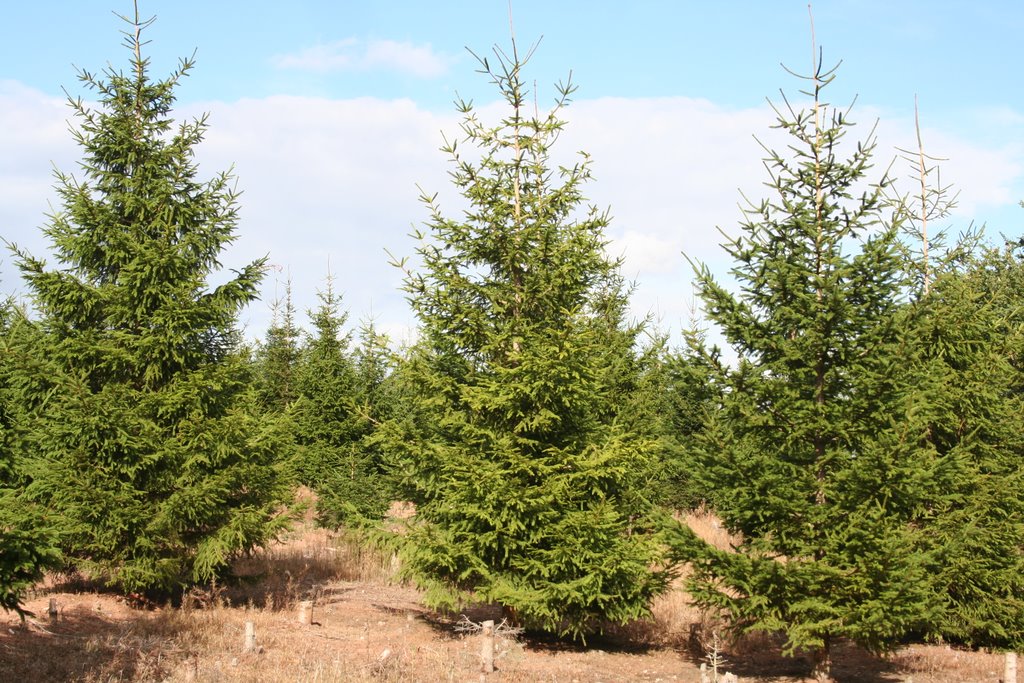
One of the few businesses to still grow Christmas trees is St Bridget Nurseries in Exeter.It dedicates about an acre of land at its Clyst St Mary nursery to growing mostly Norway spruces. Although this variety is the most traditional and usually the cheapest choice, it has fallen from favour as it tends to shed needles quite heavily (the secret is to keep them well watered and away from radiators). The nursery also grows a small number of Nordmann fir, which hold their needles more but is far more expensive because it is much slower growing.
All live Christmas trees – whether they’re cut or potted –benefit from being kept out of doors for as long as possible. When you bring them indoors, position them in as cool a place as possible – and certainly away from sources of heat – such as near fires or radiators. If they dry out they will start to look tired and drop their needles. Even Nordmann and other non-needle-drop trees will look better and last longer if they’re kept watered.

Potted trees should be watered regularly so the compost doesn’t dry out. Cut trees can be stood in self-watering stands and the reservoir topped up daily. To help improve water uptake, remove the bottom inch or so of stem from cut trees before bringing them indoors. And you can help even further by spraying all live Christmas trees with an anti-desiccant – such as Spray ‘N’ Save – before moving them indoors.
St Bridget's also sells holly wreaths - made by hand at the St Bridget Floristry Department - and bunches of holly and mistletoe. St Bridget Nurseries is open Monday to Saturday from 8am to 5pm, Sundays 10.30am to 4.30pm (except Christmas Eve 10am to 4pm). Closed Christmas Day and Boxing Day.

Friday, December 01, 2006


Poinsettias
Poinsettias certainly are difficult to beat for the strong splash of colour they provide, and now there’s such a wide range of colours – not just the traditional red. St Bridget Nurseries grow all their Poinsettias in their greenhouses on the nursery in Exeter so they have been given the best treatment possible. It’s definitely better to buy from a garden centre rather than an outdoor stall as cold weather and wind are a killer and since St Bridget's Poinsettias only travel two miles at most to their Clyst St Mary Garden Centre - they are really fresh. Plus to give your plant the best start to their home life with you, they’re wrapped up before you leave the garden centre.

When you get them home give them a position in plenty of good light and an average temperature of 55-60F – but keep them away from radiators and other sources of heat – and out of draughts and fluctuating temperatures.

Allow the top of the compost to dry slightly before watering, but then give them a thorough watering ensuring all the compost is moist and feed with a houseplant fertiliser each time. Daily misting of the leaves will help ensure good colour and healthy growth.
Keep your Poinsettia until June 2007 and you can enter St Bridget's competition. Return your Poinsettia to St Bridget Nurseries in Old Rydon Lane Exeter for 12 noon on Saturday 2nd June 2007 and it will be judged for its shape, colour and overall condition. Prizes will be awarded for 1st, 2nd & 3rd with prizes of £25, £10 & £5 of St. Bridget Nurseries’ Gift Tokens for the best plants.

Good luck and remember to pick up your St Bridget Nurseries guide to growing Poinsettias before you leave their garden centre.

Thursday, November 16, 2006


Create your own fruit garden – now’s an excellent time to plant fruit trees and bushes, and St Bridget Nurseries have lots to choose from.
To ensure bumper crops, plant with plenty of organic matter and slow-release fertiliser and make sure you train bushes where necessary and use stakes and ties for fruit trees. It's easy to grow your own and think if the environmental benefits...save on food miles and knowledge that what you are eating is fresh and chemical free!
Make gooseberry fool with Gooseberries, Redcurrant jelly or Cranberry sauce for next year's Christmas meal. Blackberry and apple crumble, summer pudding or simply an Apricot! There's lots to choose from so give it a go and grow your own!
We've also been given a special BLOG offer! Spend over £10 on fruit plants and trees in one single transaction between now and December 11th and present a copy of this blog and you will receive a FREE recipe book - Favourite Apple Recipes - which has over 30 fruit recipes in it!

Thursday, November 09, 2006

EVERGREENS
Planting evergreens is one of the best ways of bringing colour and texture to the garden at this time of year. It’s hard to beat the value of conifers for the winter garden. There are so many colours and shapes – and because there are types that grow from a few inches to several feet high, there are types for every garden and situation.

If you choose carefully you can also get evergreen plants with some welcome winter flowers. Try planting mahonia, Viburnum tinus and winter-flowering heathers. And don’t forget that some evergreens also produce colourful berries at this time of year – such as pyracantha, skimmia and cotoneaster.

If you have a look around St Bridget's planteria you’ll see there are plenty of ideas for turning your garden into a winter wonderland.

And, as with all plants, get them off to a flying start by planting with compost and a slow-release fertiliser.

Wednesday, November 01, 2006

Hedging
Now’s a good time to plant a hedge and here’s how to ensure you get the best from your new hedges.
Hedges are the perfect solution for providing a colourful, natural-looking boundary to a garden. And there are lots of plants suitable for providing a hedge, barrier or screen – whether you want evergreen or deciduous, formal or informal.
It’s important that you prepare the soil well. Start by digging out a trench at least 18 inches wide and 12 inches deep. Fork over the base of the trench and incorporate plenty of organic matter – such as well-rotted manure, compost, composted bark or planting compost. Mix the excavated soil with lots more organic matter and some bonemeal or controlled-release fertiliser, and re-fill the trench – firming the soil as you go.
Before planting water the plants well; you should place the roots of bare-root plants in a bucket of water for half an hour. Then plant at the right distance; most types should be planted 18 inches apart, although conifers and more vigorous types can be planted two to three feet apart. After planting water in well, and water during dry spells for the first year. St Bridget Nurseries have lots of suitable hedging plants including cheaper bare-rooted plants – pop in to get that privacy from the neighbour that you’ve always wanted ;-)

Friday, October 27, 2006

NURSERY RETAILER OF THE YEAR FINALIST!
First place to release this information...
St Bridget Nurseries are finalists in the Nursery Retailer of The Year 2006!! The winner will be announced at an awards ceremony held in London on November 22nd - good luck to St Bridget Nurseries and all its staff!

Wednesday, October 25, 2006

Care of Perennials
If you have clumps of Perennials in your garden that aren't performing as well as they used to then it maybe because the area has been over-congested. Lift the clump and separate it into smaller pieces. Start by cutting down the stems of the plants that have finished flowering - to ground level. Carefully lift the clump with a garden fork. You need to separate the clump into smaller pieces - either using two forks back to back or using an old knife for plants with fleshy roots. You need only keep the healthy, younger outer portions of the clump since the middle will contain the oldest parts and these can be disposed of. You are now ready to replant. If you're planting the same position dig in plenty of composted bark and add a little bonemeal to the soil. Replant so that the pieces are at the same depth as they were before lifting. Water thoroughly and be prepared to water in the following spring and summer during very dry weather. Mulching the soil with composted bark or compost will help retain moisture. St Bridget's sell composted bark in 70Litre bags for £4.99 or you can buy 5 bags for £30.

Tuesday, October 24, 2006


Birds of a feather...
At the weekend, the RSPB visited St Bridget Nurseries. As well as answering lots of questions the RSPB team gave tips on how to plant a garden for birds. Birds require food, cover and nesting sites to survive. Careful choice of plants and provision of other features such as ponds, will help you create a haven for wildlife in your garden. Native trees and shrubs are preferable, since most of them provide insects in the breeding season as well as seeds in winter. Birch (Betula pendula), for example, supports good quantities of caterpillars, which attract birds plus the seeds attract redpolls. Crab apples (Malus sylvestris) are all good sources of food while European Larch (Larix decidua) is a deciduous conifer with seasonally abundant insects that attract finches. In autumn and winter the cones can also attract siskins and crossbills. The RSPB have a large selection of comprehensive leaflets about wildlife gardening and St Bridget's have also written a leaflet in conjunction with Devon Wildlife Trust. In addition, St Bridget Nurseries have just released their Autumn 2006 Open Ground list of Native Trees - trees ideal for a wildlife garden.

Wednesday, October 11, 2006


Get ready for Halloween...
It's only three weeks until everything gets a little spooky and witches come out to play. Despite modern technology we all know that a witch's preferred method of transport is her broom. These can be hard to find sometimes especially with so many vacuum cleaners. Luckily, for all budding witches out there you can find Besom Brooms for sale at St Bridget Nurseries. They aren't guaranteed to fly but they can be used to sweep up leaves in your garden. At only £3.99 each they are the perfect accessory!

Tuesday, October 10, 2006


Going bare?
Don't worry we're not naked - we're talking bare-rooted plants! This doesn't mean the plant is rootless but simply supplied to you without a pot or soil around its roots. Why? Well, trees and shrubs that you buy in a container are likely to have grown up in a field somewhere. Around November when the trees are dormant (not growing or producing fruit but effectively hibernating) they are dug up for selling - this is when you can buy them bare-rooted before they are potted. The benefits of buying plants at the bare-root stage is 1) they are cheaper as the grower doesn't have to supply soil or a pot and 2) they are lighter for you to carry for the same reason (no soil or pot)
If you are interested in bare-rooted Ornamental Trees, Native Trees, Fruit Trees or large Conifers then call St Bridget Nurseries for a plant list and order soon so you can have your plants fresh from the field! Call 01392873672 or e-mail marketing@stbridgetnurseries.eclipse.co.uk you can also view the trees in the field in Exeter by making an appointment in advance.

Monday, October 09, 2006

BIRD CARE
A bird-friendly garden at this time of year should be full of seeds, nuts and berries. Nectar and pollen tend to be in short supply in the autumn, but they are still essential foods for many insects that over-winter as adults and then become food for birds in early spring. To encourage native birds and wildlife it is important to offer them traditional native food. Plants such as Crab apples, Holly, Elder, Birch or Hawthorn are just some of the great food supplies for birds through the winter. Container-grown plants are always available but you can save money at this time of year by opting for bare-rooted hedging, or root-balled trees and shrubs. We are lucky in Devon as local growers St Bridget Nurseries dig all their bare-rooted tree fresh to order from their fields in Exeter PLUS you can find out more about Wildlife Gardening from RSPB experts visiting their Garden Centres. On Saturday 21st October the RSPB will be offering a drop in clinic at St Bridget Nurseries Old Rydon Lane, Exeter Garden Centre and they will be at the Sidmouth Road, Clyst St. Mary Garden Centre on Sunday 22nd October. Drop in clinic all day plus question and answer session at 2pm each day.
Plus the garden centres have great offers on a range of bird feeders, nesting boxes and food as well as some great wildlife boxes like a Hedgehog House!

Thursday, October 05, 2006

Pest Watch!
Although most pests in the garden are less active in the autumn, it pays to keep an eye out for any problems and deal with them as soon as possible.
Many pests will lay eggs on plants for overwintering and these will attack early next year. Deciduous trees and shrubs that have dropped their leaves can be treated with Growing Success Winter Tree Wash.
Slugs and snails will be very active during damp weather, so protect vulnerable plants with your favourite control method - remember there are wildlife friendly options such as copper tape.
Diseased leaves that are left on the ground will provide a source of infection for next year, so they should be carefully raked up and disposed of.

Wednesday, October 04, 2006

Pot up cuttings!
Cuttings of fuchsias, geraniums and other half-hardy perennials taken in August and September should be ready for potting on individually. Use fresh compost and 9cm pots. You can get all your pots, compost, labels and fleece to protect the cuttings from the cold at St Bridget Nurseries' Garden Centres in Exeter.

Monday, October 02, 2006


CONIFERS ARE IN!
It's National Conifer Week (1st-8th October)!
National Conifer Week is organised by the Association of British Conifer Growers and funded by the Horticultural Trades Association and Horticultural Development Council (More information on the event and conifers can be found at www.conifers.org.uk)
Conifers are great plant to give immediate impact in your garden at this time of year - plus they are incredibly easy to care for. Conifers need very little in the way of regular attention except for a good watering in after planting and the seasonal rain should take care of them after that! St Bridget Nurseries grow over 123 different varieties of conifers on their nursery in Exeter and open ground larger specimens are available to order directly from the fields. The company uses biodegradable sacks to keep the root ball together and aid planting, all you have to do is put the plant in the ground complete with sack and cover with soil.
In fashion like never before, conifers have shaken off their 1970’s image to be a cool, low maintenance choice for any garden. And the experts are also convinced ─ conifer gardens at the Chelsea RHS Flower Show and the Hampton Court Palace Flower Show both received medals this year. Conifers come in a rainbow of colours greens, yellows, whites, oranges, blues and purples. Some have beautiful variegated foliage, with patterns of stripes, spots and patches. Many change colour with the seasons. As a plant of the month special offer St Bridget's are selling young conifer plants at reduced prices. Plants in 9cm pots are just £1.35 and those in 1 litre pots are just £2.50 each! These plants would look great in pots with bulbs and Violas.